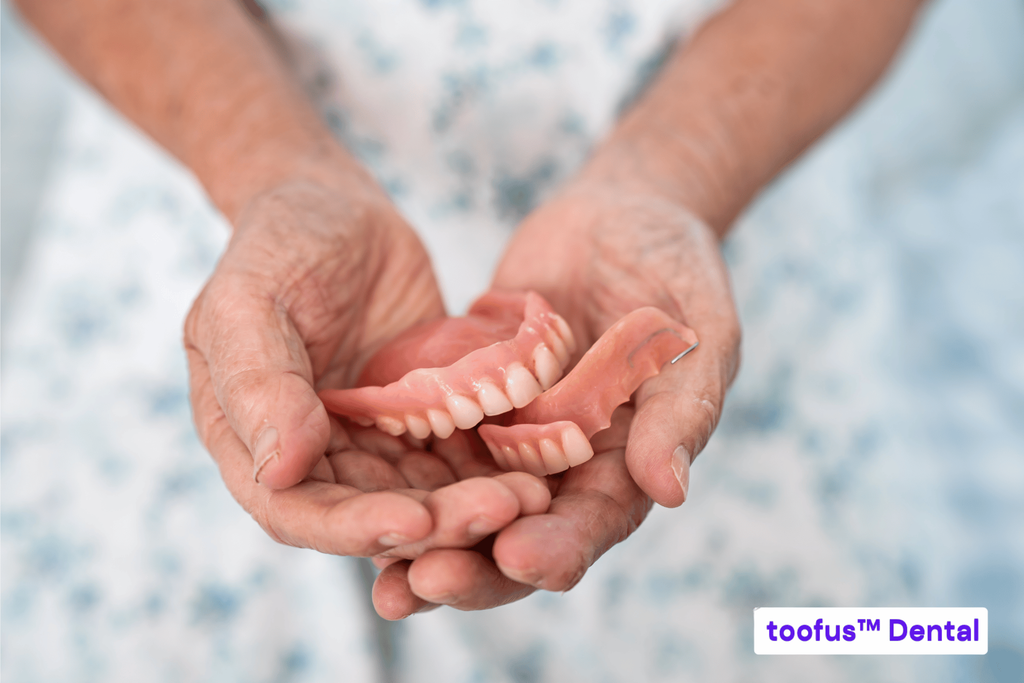
Patients have a love-hate relationship with dentures. For some, it is an affordable and faster way to replace missing teeth. For others, they might dislike the loose fit, the restricted diet and the adjustment period.
Chances are, you might have heard about denture experiences from someone close to you.
If you have decided to proceed with dentures because dental implants might not be suitable for you, you do not wish to spend more than necessary, or because you simply do not want to undergo implant surgery, then this will help you know what exactly you are signing up for and what you can realistically expect from dentures.
| Quick Summary |
|---|
| ▶ Dentures can help improve eating, appearance, and how you talk. ▶ Dentures cannot help reverse a sunken appearance or provide complete stability of bite. ▶ Implant-supported dentures can help improve overall bite stability for biting and chewing. ▶ Dentures will need frequent adjustments as you lose jaw bone mass and your gum recesses. ▶ You should be ready to adjust your dentures as and when it is loose to improve fit. |
Table of Contents
What Realistically Improves with Dentures
Eating
Dentures restore the ability to eat properly again.
However, dentures are still false teeth attached to nothing but your gums. Eating harder foods like nuts or tough meats may displace your dentures or make chewing a frustrating experience.
When you first get your dentures, start with soft foods like rice, fish and soft cooked vegetables. Fortunately, most everyday Singaporean food becomes manageable within a few weeks.
If you love eating roti prata, nasi briyani, or chicken rice, you will be happy to know that all these foods are possible to be chewed on with dentures. However, very hard or sticky foods like crusty bread, sticky sweets and dates may remain challenging to eat with conventional dentures.
If bite stability is a priority, you can consider dental implants for single or multiple missing teeth, or implant-supported dentures (overdentures) for full arch replacements.
Appearance
Well-fitted dentures support your facial structure and help prevent sagging that can make missing teeth age your appearance.
Restoring that support often lifts the cheeks and fills out the lips in ways that make a noticeable difference.
If you have existing teeth, your denture teeth are chosen to match your natural teeth. For patients with full dentures, you can customise your dentures to match your ideal smile.
Most patients who undergo denture treatment at toofus™ are surprised by how natural their dentures can look.
If you are looking to make a more comfortable set of full dentures, you can request for FlexRx™ Hybrid dentures. These dentures are 100% customised to fit your gums and appearance.
All FlexRx™ Hybrid dentures combine the slight flexibility of flexible dentures with the structure of acrylic.
Speech
Missing teeth, especially at the front, can affect how you sound and articulate words. Patients often lament that they are unable to speak properly without their front teeth as it feels like air is escaping from their mouth.
Speech can take on an airy, slightly hollow quality, with certain words harder to form cleanly.
Dentures solve this speech impediment. However, there is a short adjustment period where some sounds feel unfamiliar. For the vast majority of patients, this settles within a week or two. Reading aloud at home, even just a few minutes a day, can speed up the process.
What You Should Not Expect From Dentures
Stability of bite
While dentures can support eating and chewing, it is not the most stable teeth replacement option. There is nothing holding onto them besides your gums and a denture adhesive like Polident.
If you generally have a shorter ridge or have gum recession from long-term denture wear, dentures might not provide you with the most stable bite even after constant adjustment.
If you do not want to miss out on your favourite foods like steak, you might want to consider dental-implants supported dentures or All-on-x dental implants instead of dentures.
Dr Amanda Koh
Many patients are able to enjoy their favourite foods again because of more stability in their bite.
Reversal of sunken appearance
Dentures can restore some support to the lips and cheeks, making the face appear fuller after tooth loss. However, they cannot completely reverse facial changes caused by significant jawbone resorption, ageing, weight loss or reduced skin elasticity.
The degree of improvement depends on your remaining bone, facial structure and denture design. Implant-supported options may provide better support in selected cases.
Lifetime perfect fit
Dentures are not designed to maintain a perfect fit for life.
After teeth are lost, the gums and jawbone gradually change shape, which can make dentures feel looser over time.
Regular dental reviews, adjustments and periodic relining can restore comfort and stability. Eventually, replacement may be necessary if the denture becomes worn, damaged or no longer matches your mouth properly.
The Adjustment Period: What Is Actually Normal With Dentures
The first two weeks are the most challenging. Your gums are adapting, and your cheeks and tongue are learning to work with something new in their space.
Some symptoms that you may experience are:
- Mild gum soreness where the denture rests that usually eases within the first two weeks.
- Extra saliva for a few days (your mouth may confuse the denture with food in the beginning).
- A slightly awkward feeling when eating in front of others or speaking.
Most patients need 1–2 adjustment visits in the first month.
If you are an existing patient at toofus™ Dental, you have up to 6 months to make adjustments on your dentures.
You do not have to live with loose and ill-fitting dentures. Let us know and we will assist you with the adjustments.
These denture adjustments are small refinements that help your dentures fit properly to your mouth.
By week three, the discomfort would have eased considerably. By weeks six to eight, most people stop thinking about their dentures at all.
What To Be Realistic About When It Comes To Dentures
Dentures are excellent, but they are not the same as your natural teeth.
The following are some differences you may notice:
- Some bite force is reduced with conventional dentures compared to natural teeth or implant-supported options. You will adapt your chewing style, and most people barely notice the difference after a few months. If maximum bite strength matters to you, discuss overdenture or All-on-X options with your toofus™ dentist.
- Some adhesive may help in the early stages of wearing conventional dentures, especially while your gums are still settling.
- Your mouth changes gradually over time, and denture fit follows. Relining, an adjustment to the inner surface, is routine denture maintenance. This is typically needed every few years. It is a normal part of owning dentures, not a sign that your dentist has failed to provide you with good dentures.
What About Implant-supported Options? Do They Feel Different?
Yes, noticeably so. Patients who choose implant-supported overdentures consistently described a significant boost in confidence.
The denture clicks firmly onto the implants, and they stay in place when you eat and allow you to speak smoothly.
For patients who want to avoid loose or moving dentures, implant-supported dentures can be a good option. They are more stable, comfortable and closer to the feeling of natural teeth than conventional dentures.
Dentures can help improve your overall quality of life but they will not be as good as your natural teeth or dental implants
Realistically, well-designed dentures can restore your smile, improve your speech and allow you to enjoy a wider variety of foods again. They can also support your lips and cheeks, helping to reduce some of the changes in facial appearance caused by missing teeth.
However, conventional dentures rest primarily on your gums. They will not provide the same bite strength or stability as natural teeth, dental implants or implant-supported dentures. Hard, tough or sticky foods may remain challenging, particularly if you have significant gum or bone recession.
You should also expect an adjustment period. Mild soreness, increased saliva and temporary difficulty eating or speaking can occur during the first few weeks. Follow-up adjustments, proper cleaning and occasional relining are normal parts of maintaining dentures as your mouth changes over time.
The best option depends on what matters most to you. Conventional dentures may be suitable if you want an affordable, removable and non-surgical solution. If greater stability, chewing ability and confidence are priorities, implant-supported dentures or All-on-X treatment may be worth considering.
Speak with a denture dentist to compare your options and understand what each treatment can realistically achieve based on your remaining teeth, gums, bone condition, lifestyle and budget.