All-on-6
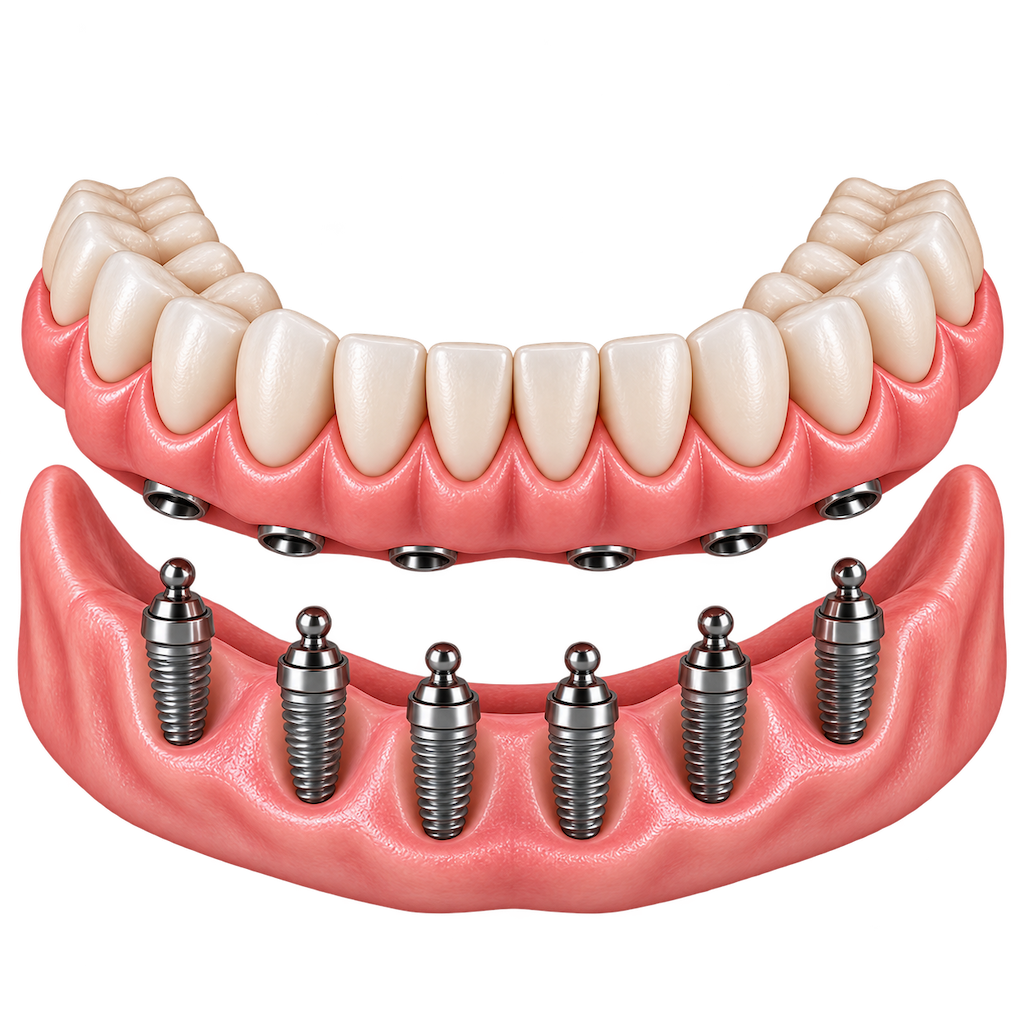
All-on-6 uses six dental implants distributed across the jaw to support a fixed full-arch bridge. The six implant sites provide multiple points of support and help distribute biting forces across the restoration. Prices start at $2,380 after MediSave deductions.
MediSave Claimable
From $2,380
All-on-6 with Korean Dental Implants
A fixed bridge supported by six Korean dental implants. An affordable way to replace a full arch of missing teeth with a fixed restoration without compromising on quality.
All-on-6 with Europoean Dental Implants
A fixed bridge supported by six European dental implants. A mid-range option for patients looking for a balance between treatment cost and an established European implant system.
All-on-6 with Swiss Dental Implants
A fixed bridge supported by six Swiss dental implants. A premium option suitable for patients who prefer an established implant system backed by research and development.
All-on-6 at toofus™ Dental
What Each All-on-6 Package Includes
Know What You Are Paying For
At toofus™ Dental, we believe that building a relationship with you begins even before you step into one of our clinics across the island.
That is why we provide clear, transparent information about our treatment costs on our website, so you can have a better idea of what to expect before making an appointment.
Our website is reviewed and updated weekly to keep our information fresh and helpful.
For a full breakdown of our fees, you may refer to our treatment costs page.
All-on-6 Inclusions
- Consultation and assessment
- X-rays
- 6 dental implants
- Implant placement procedure
- Fixed All-on-6 dental bridge
- Post-treatment reviews and follow-up
Have Questions About Your Treatment?
All-on-6 Experience
What Most Patients Say About All-on-6
Six Points of Implant Support
All-on-6 uses six dental implants positioned across the jaw to support a fixed full-arch bridge. The six implant sites provide multiple points of support for the restoration.
Fixed Full-Arch Restoration
The six dental implants support a fixed bridge that replaces an entire upper or lower arch of teeth. The restoration remains secured to the implants rather than being removed by the patient daily.
More Even Distribution of Biting Forces
With six implants positioned across the jaw, biting and chewing forces can be distributed across multiple points of support. This helps provide stable support for the full-arch bridge.
Restores a Complete Smile
All-on-6 replaces an entire arch of missing or failing teeth with a full set of replacement teeth, restoring the appearance and function of your smile.
Confidence When Eating
A fixed implant-supported bridge can provide greater confidence when biting and chewing compared with relying on loose or unstable removable dentures.
Do You Really Need All-on-6?
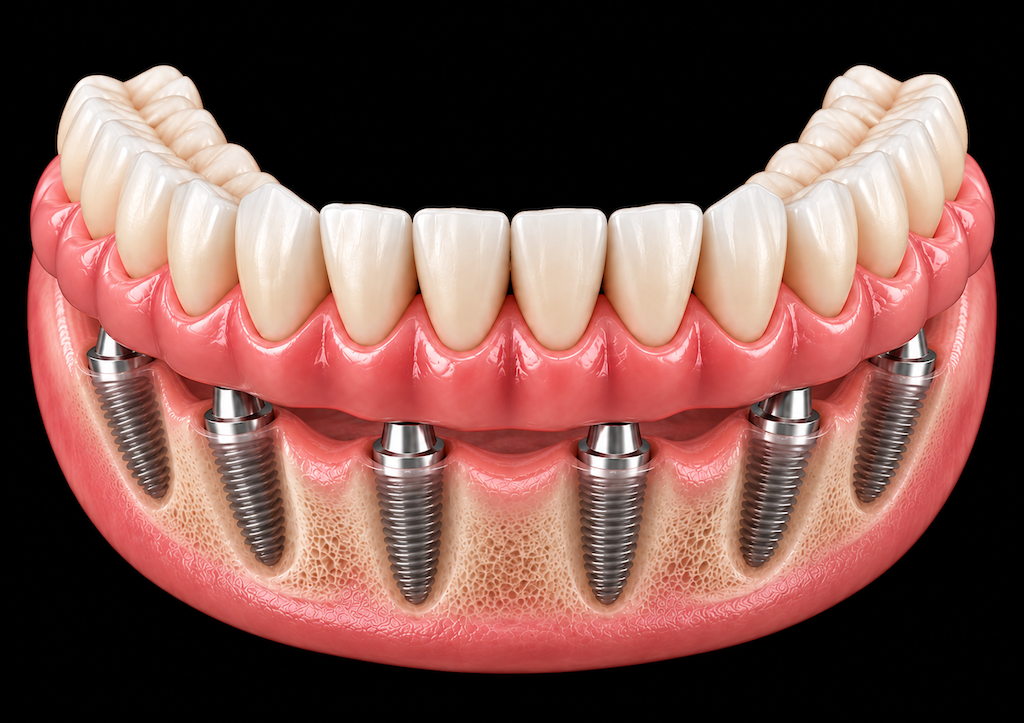
With All-on-6, six dental implants work together to provide support for a fixed set of replacement teeth across the upper or lower jaw.
You may benefit from All-on-6 if you experience any of the following:
- You require full-arch replacement of the upper or lower teeth.
- You have sufficient healthy jawbone to accommodate six planned implant sites.
- Your dentist recommends additional points of implant support across the arch.
- You want a fixed implant-supported restoration rather than removable dentures.
- Your bite, anatomy and treatment requirements make a six-implant approach appropriate.
All-on-6 Patient Journey at toofus™ Dental
1st Visit: X-rays (OPG)
Your All-on-6 journey at toofus™ Dental begins with an OPG X-ray, giving your dentist a broad view of your teeth, jaws and surrounding oral structures.
The initial X-ray is reviewed alongside your clinical examination to identify existing dental concerns and assess the overall condition of your mouth before further treatment planning begins.
At toofus™ Dental, X-rays are provided at no additional charge. This is because we believe that having the right diagnostic information helps us provide more appropriate treatment recommendations.
1st Visit: Consultation and Assessment
Next, your dentist will carry out a comprehensive assessment to determine whether an All-on-6 restoration is appropriate for you.
This includes examining your remaining teeth, gums and jawbone, as well as any existing dental conditions that may affect treatment.
If you still have teeth in the affected arch, your dentist will assess their condition and determine whether they can be retained or need to be removed as part of your treatment plan. Your jawbone will also be assessed to determine whether it can provide adequate support for six implants.
1st Visit: CBCT Scan and Treatment Planning
If you decide to proceed with All-on-6 treatment, a 3D CBCT scan will be done to provide a three-dimensional view of your jaw.
Using the scan, your dentist can evaluate the height, width and distribution of the available bone and map out suitable locations for the implants. Important structures such as the nerves and sinuses will also be considered during the planning process.
If you do not have enough bone to support the implants, we may discuss additional procedures, such as bone grafting, depending on your treatment needs.
2nd Visit: Guided Biofilm Therapy (GBT)
Before your All-on-6 treatment, your teeth will be thoroughly cleaned with Guided Biofilm Therapy (GBT). This helps to create a clean oral environment before your implants are placed.
2nd Visit: Cold Plasma Treatment of Dental Implants
Before placement, the dental implants are treated with cold plasma to clean and activate the implant surface, with the aim of supporting its interaction with the surrounding bone during healing.
2nd Visit: All-on-6 Implant Surgery
Before the treatment begins, local anaesthesia will be administered to numb the treatment area. Your dentist will then place the six dental implants at the locations determined during the planning stage.
Each implant is positioned according to your jaw anatomy, available bone and the requirements of your planned full-arch restoration. Guided implant surgery may be incorporated where clinically appropriate.
Once the implants are placed, your dentist will suture the surgical sites. Photobiomodulation Therapy (PBM) is then performed to support the post-surgical healing process.
2nd Visit: Provisional Bridge
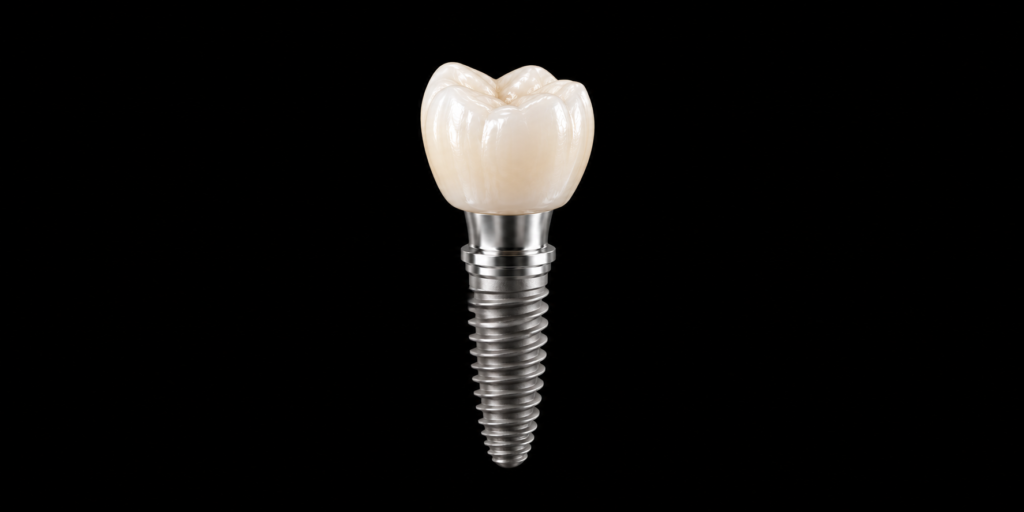
Following your implant surgery, a provisional full-arch bridge will be fitted. This provides you with a temporary set of fixed replacement teeth to use during the healing period. The provisional bridge remains in place while the six implants integrate with the surrounding jawbone in a process called osseointegration.
3rd Visit: Healing and Implant Review
Approximately two weeks later, you will return to the clinic to have your sutures removed. During this appointment, your dentist will also check on the surgical site and ensure that healing is on track.
4th Visit: Bone Stability and Osseointegration Review
You will return to the clinic three months later for your dentist to assess the stability of your implants. At toofus™ Dental, an Implant Stability Quotient (ISQ) device is used to assess how securely the implants have integrated with the jawbone.
4th Visit: 3D Intraoral Scan for Your Final Bridge
Once your dentist confirms that the six implants have achieved satisfactory stability, they will take digital scans of your mouth to begin fabricating your final bridge.
Your dentist will choose the tooth shade that is closest to your natural tooth colour and send the information to the lab for fabrication.
5th Visit: Final All-on-6 Bridge
Your final bridge is typically ready 1-2 weeks after your digital scan.
At this appointment, your dentist will remove the provisional restoration and fit your completed All-on-6 bridge. Your dentist will check its fit, appearance and bite before making any necessary adjustments and completing the restoration.
Total Treatment Duration for All-on-6

All-on-6 treatment typically involves five visits.
All-on-6 Alternatives
All-on-6 is not the only fixed full-arch restoration available. You may be suitable for other options depending on your needs and oral health.
1
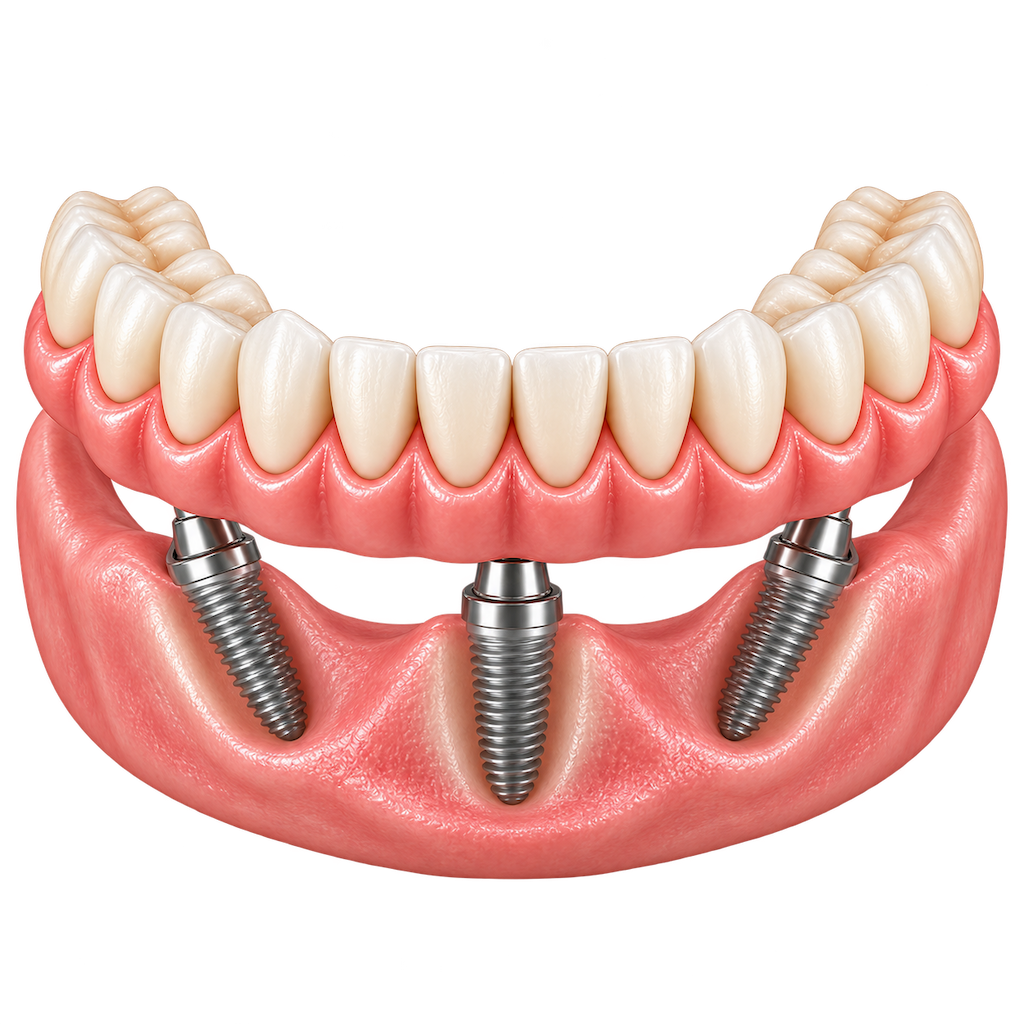
All-on-3 uses three dental implants to support a fixed full-arch restoration and may be suitable for patients who require fewer implant sites.
2
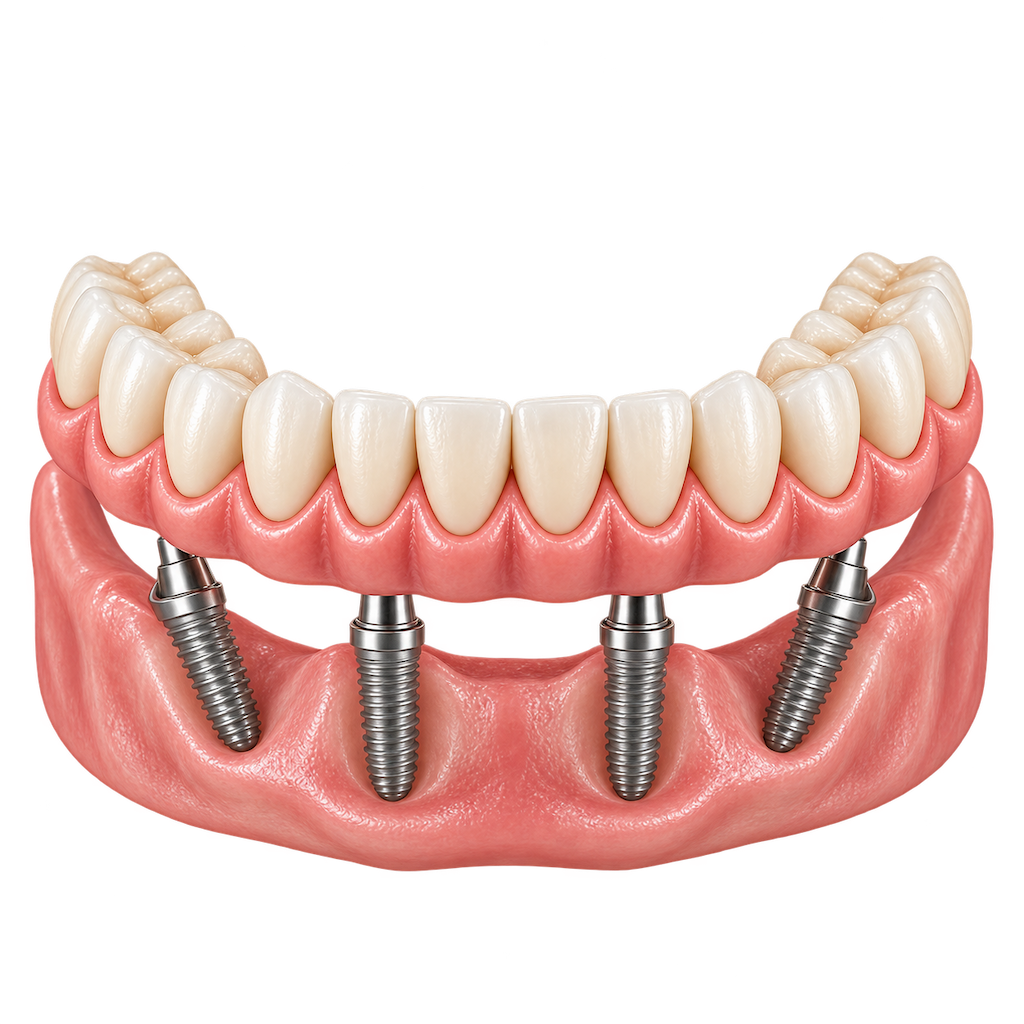
All-on-4 Dental Implants
All-on-4 uses four strategically positioned implants to support a fixed full-arch restoration and may be suitable depending on bone availability, anatomy and treatment requirements.
3
Implant-Supported Overdentures
An implant-supported overdenture uses dental implants to secure a removable set of replacement teeth. Unlike All-on-6, the restoration can be removed for daily cleaning.
Not sure what you are most suitable for?
All-on-6 Frequently Asked Questions
Everything you need to know about All-on-6 and more.
Why might my dentist recommend six implants for a full-arch bridge?
Six implants provide multiple points of support across the jaw for a fixed full-arch bridge. Your dentist may recommend All-on-6 when your jawbone, anatomy, bite and overall treatment requirements are suitable for a six-implant approach.
How is All-on-6 different from All-on-4 and All-on-4?
The main difference between All-on-3, All-on-4 and All-on-6 is the number of implants used to support the full-arch bridge. All-on-3 uses three implants, All-on-4 uses four implants, and All-on-6 uses six implants. The additional implants provide more points of support and help distribute biting forces across the jaw. However, suitability depends on available bone, oral health and your overall treatment needs.
Do I need more healthy jawbone for All-on-6 treatment?
All-on-6 requires sufficient healthy bone at the six planned implant sites. Your dentist will use clinical examination and dental imaging to assess the amount and distribution of available bone before determining whether All-on-6 is suitable for you.
Do I need bone grafting before All-on-6?
Not everyone requires bone grafting. Your dentist will assess the amount and distribution of available jawbone using clinical examination and dental imaging. If there is insufficient bone at one or more planned implant sites, bone grafting may be recommended.
How do six implants distribute biting forces across the bridge?
The six implants are positioned at different locations across the jaw to support the full-arch bridge. This allows forces generated during biting and chewing to be distributed across multiple implant sites rather than concentrated in one area.
Does having six implants make All-on-6 more stable?
Six implants provide additional points of support for the full-arch bridge. However, this does not mean All-on-6 is automatically more stable or better for every patient. Implant stability and treatment success depend on several factors, including implant positioning, available bone, healing and individual anatomy.
Can All-on-6 be used to replace teeth in the lower jaw?
Yes. All-on-6 may be used to restore a full lower arch in suitable patients. It may also be used for the upper arch. Your dentist will assess each jaw individually to determine whether there is sufficient bone and whether six implants are appropriate for the planned restoration.
How should I care for my All-on-6 bridge at home?
Although your All-on-6 bridge is fixed in place, daily cleaning remains important. You will need to clean your replacement teeth, around the implants and underneath the bridge using techniques and cleaning aids recommended by your dental team. Regular professional cleaning and dental reviews are also important for maintaining your implants, gums and bridge.
Can an All-on-6 bridge be repaired if it becomes damaged?
Depending on the type and extent of damage, an All-on-6 bridge may be repaired or may need to be replaced. Your dentist will examine the bridge, implants and bite to determine the most appropriate option. Avoid attempting to repair or adjust the bridge yourself.
What factors determine whether All-on-6 is suitable for me?
Your dentist will consider the amount and distribution of your available jawbone, gum health, remaining teeth, bite, general oral health and surrounding anatomical structures. Dental imaging, including a 3D CBCT scan, can also be used to plan the six implant positions and determine whether All-on-6 is an appropriate treatment option.