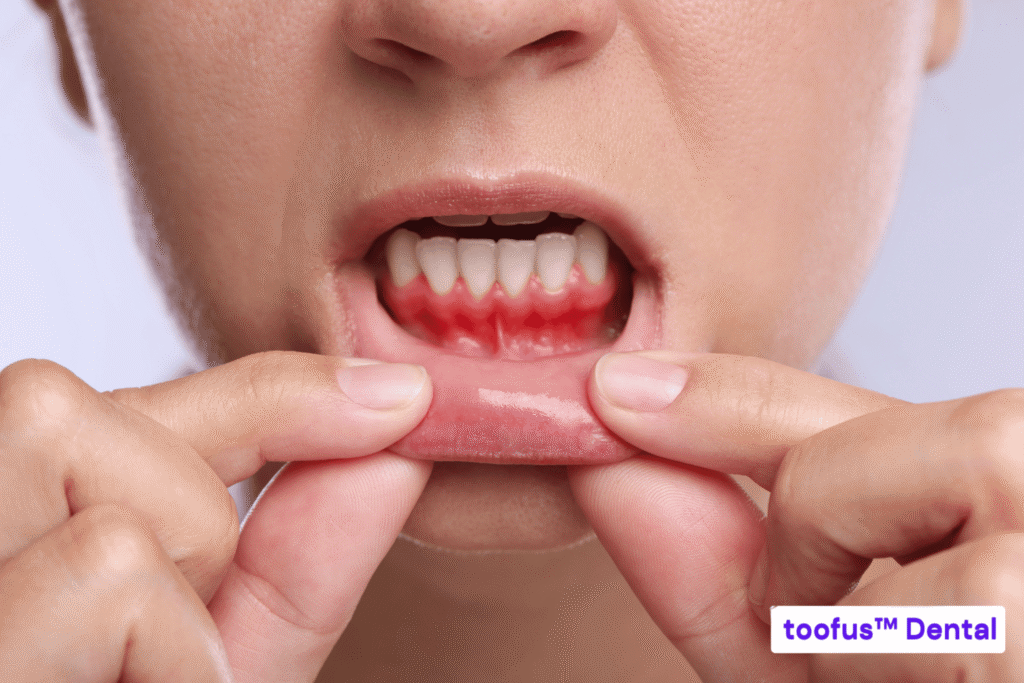
If you have recently visited a dentist and been told you require gum disease treatment, you might be alarmed at what it entails.
It is also possible that you are here reading this article because you suspect that you might have gum disease because of bleeding gums, loose and shaky teeth. Your partner/spouse might also have told you about your lingering bad breath.
You might also be in the midst of considering taking up dental implant or orthodontic treatment, and have been told that you will need gum disease treatment before implant surgery or braces/clear aligners treatment.
If you are experiencing one of the aforementioned, this guide might be able to help you understand gum disease better, run through possible treatment options as well as gum disease treatment costs and understand the short- and long-term impact of leaving active gum disease untreated.
| Quick Summary |
|---|
| ▶ Gum disease can cause bleeding gums, swelling, bad breath, gum recession, loose teeth and eventual tooth loss. ▶ Gum disease treatment depends on the severity of the condition and the amount of gum and bone damage present. ▶ Early gum disease may be treated with professional cleaning, while more advanced cases may require deep cleaning or periodontal treatment. ▶ A gum disease assessment may include an oral examination, gum pocket measurements and dental X-rays. ▶ Regular periodontal maintenance and good oral hygiene are important for controlling gum disease and reducing the risk of recurrence. |
Table of Contents
- Who Can Get Gum Disease?
- Symptoms of Gum Disease
- Stages of Gum Disease
- Causes of Gum Disease
- Gum Disease Diagnosis
- At-Home Remedies for Gum Disease
- Professional Gum Disease Treatment
- Gum Disease Treatment Procedure
- Benefits of Treating Gum Disease
- Gum Disease Myths and Facts
- Gum Disease Prevention
- Gum Disease Treatment Risks
- Gum Disease Treatment Complications
- Recurrent Gum Disease
- When to See a Dentist for Your Gum Disease
- Gum Disease Treatment Costs
- Do Not Wait Until Your Teeth Become Loose
Who Can Get Gum Disease?
Unfortunately, everyone can get gum disease.
Gum disease can be found in all age groups for a range of different reasons. Babies can get gum disease from chewing on things or teething. Pregnant mothers can get gum disease because of changing hormones. Adults can get gum disease from poor oral hygiene, long-term oral or systemic neglect, poor systemic health, unhealthy habits like smoking or drug abuse, or even medications taken.
Gum disease is simply bacteria that release toxins, causing inflammation. The inflammation can worsen because of intrinsic and extrinsic lifestyle factors.
In fact, research studies show that everyone has gum disease at least one or several times in their lives. More than 70% of adults also suffer from some degree of gingivitis.
The good news is that if you are in the early stages of gum disease, it is treatable. Treating gum disease early extends teeth longevity. It also contributes to better systemic health in the long-run.
Symptoms of Gum Disease
Gum disease is known as the silent killer for a reason. Unlike diseases that produce distinct physical changes such as rashes, swelling or skin discolouration, gum disease does none of these in the early stages. It also does not impact motor function or cause neurological decline.
Because of the lack of signs, many patients are unaware that they have gum disease until they show up for a routine check-up with us. Around the world, it has been studied that more than 70% of adults suffer from some degree of gingivitis.
The following are some of the most common symptoms of gum disease, from least to most severe.
Pinkish hue on toothbrush after brushing
If your toothbrush looks slightly pink after brushing, it is usually a sign that your gums are bleeding. This might seem harmless because there is no pain. However, healthy gums should not bleed easily. Even light bleeding can mean that bacteria and plaque are irritating your gum tissues.
Constant metallic or foul taste in mouth
A constant metallic or foul taste in your mouth can happen when bacteria, bleeding, or infection is present around the gums. Some patients describe it as a rusty taste that does not disappear even after brushing. This can be an early sign that the gums are inflamed or infected.
Swollen gums
Swollen gums usually happen when the gum tissues are inflamed. The gums may look puffy, enlarged or less firm than usual. Some patients notice that the gums feel thicker around the teeth. This swelling is your body responding to bacterial toxins around the gum line and tooth surfaces.
Bleeding gums
Bleeding gums are one of the most common signs of gum disease. You may notice bleeding when brushing, flossing or biting into harder foods. Many patients ignore this because bleeding comes and goes. However, repeated bleeding usually means that the gums are inflamed and require proper assessment.
Tender gums
Tender gums can feel sore, sensitive or uncomfortable when touched. You may feel this when brushing, flossing or eating. Some patients start brushing more gently because they are afraid of causing pain. Unfortunately, brushing less thoroughly can allow plaque to accumulate and worsen the gum condition.
Chronic bad breath
Chronic bad breath can be caused by bacteria trapped around the gums, teeth and tongue. If bad breath returns quickly after brushing or mouthwash, it may not be a simple hygiene problem. Your spouse, partner or family member may notice it before you do because the smell becomes persistent.
Gum inflammation
Gum inflammation happens when your body reacts to bacteria around the teeth. The gums may appear redder, puffier or more sensitive than usual. Inflammation is not just a surface problem. If it continues for too long, it can spread deeper and affect the supporting bone around your teeth.
Gum recession
Gum recession happens when the gums start pulling away from the teeth. Your teeth may look longer than before. You may also notice sensitivity when drinking cold water. Once gum recession happens, the exposed root surface becomes more vulnerable, and the lost gum tissue may not grow back naturally.
Pain when chewing or eating
Pain when chewing or eating can happen when the gums, bone or supporting structures around the teeth are affected. Some patients avoid chewing on one side because it feels uncomfortable. This is not normal. Pain during chewing can mean that the tooth foundation is already weakened or inflamed.
Pain when brushing teeth
Pain when brushing teeth can make patients brush less often or avoid certain areas. This can make gum disease worse because plaque continues to accumulate. If brushing causes pain, it does not always mean you are brushing too hard. It may mean that the gums are already inflamed.
Tooth mobility
Tooth mobility means that your tooth feels loose or shaky. This usually happens when gum disease has affected the bone supporting the tooth. A loose tooth should not be ignored. Even if there is no pain, the tooth may already have lost part of its natural foundation.
Bite alignment shifting
Bite alignment shifting happens when teeth start moving because their support is weakened. You may notice new gaps, food trapping, changes in the way your teeth meet or teeth that appear to flare out. Some patients only realise this when their smile or bite starts looking different.
Pus between teeth and gums
Pus between the teeth and gums is a sign of active infection. It may appear as a yellowish or whitish discharge when the gums are pressed. Some patients also notice swelling, bad taste or bad breath. This usually means that bacteria are trapped deep under the gums.
Spontaneous tooth loss
Spontaneous tooth loss can happen in advanced gum disease when the supporting bone has been severely destroyed. The tooth may become so loose that it falls out on its own. This is usually not sudden. It is often the final result of long-term untreated gum inflammation.
Unwarranted fatigue
Unwarranted fatigue can happen when your body is dealing with chronic inflammation or infection. Gum disease may not be the only cause, but it can contribute to the inflammatory load on your body. Some patients feel generally unwell without realising that their oral health is affecting them.
Systemic health decline
Advanced gum disease can affect more than your teeth. Chronic inflammation from the gums has been associated with poorer cardiovascular health, diabetic control and pregnancy outcomes. For example, diabetic patients with active gum disease may find it harder to keep their blood sugar levels stable over time.
Stages of Gum Disease
Gum disease does not usually happen overnight. It usually starts with mild gum inflammation before progressing into more serious damage around the teeth and bone.
In the early stages, gum disease can be treated and stabilised. In the later stages, the focus shifts from simple treatment to disease control, bone preservation and preventing tooth loss.
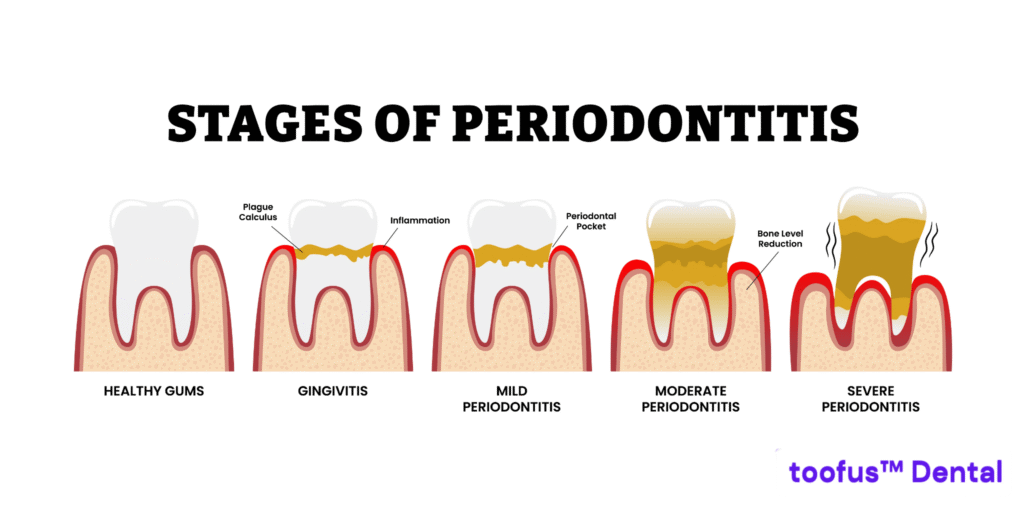
Stage 1: Gingivitis
Gingivitis is the earliest stage of gum disease. At this stage, the gums are inflamed, but the bone supporting the teeth has not been permanently damaged.
You may notice bleeding when brushing, swollen gums, bad breath or tenderness around the gum line. Some patients do not feel any pain at all. This is why many patients ignore gingivitis until it becomes more serious.
The good news is that gingivitis is reversible with proper dental cleaning, improved brushing, flossing and regular maintenance.
For example, a patient who notices bleeding when brushing may only require professional cleaning and better home care if the condition is treated early. However, if the same bleeding is ignored for years, the bacteria can move deeper under the gums and start affecting the bone.
Stage 2: Slight Gum Disease
Slight gum disease happens when inflammation has started to affect the deeper supporting structures around the tooth.
At this stage, the gums may bleed more easily. You may also notice persistent bad breath, gum swelling or mild gum recession. Some patients may start to feel that food gets trapped more often between their teeth.
This stage is more serious than gingivitis because early bone loss may have started. Once bone is lost, it does not naturally grow back on its own.
Treatment usually involves deeper cleaning below the gum line to remove bacteria and hardened tartar. The aim is to stop the disease from progressing and protect the remaining bone support.
Stage 3: Moderate Gum Disease
Moderate gum disease happens when the infection has progressed further below the gums.
At this stage, the gum pockets around the teeth may become deeper. Bacteria can hide in these pockets, making it harder for patients to clean properly at home. You may notice gum recession, looser teeth, food trapping, gum tenderness or changes in the way your teeth bite together.
This is also the stage where patients may start to realise that the problem is not just cosmetic. The teeth may still look normal from the outside, but the foundation underneath may already be weakening.
Treatment may involve scaling and root planing, periodontal maintenance, antibiotics, laser-assisted gum treatment or referral for surgical gum treatment if required.
Stage 4: Periodontitis
Periodontitis is advanced gum disease. At this stage, the infection has caused significant damage to the gums, bone and supporting structures around the teeth.
You may experience loose teeth, shifting teeth, gum recession, pus, pain when chewing, persistent bad breath or changes in your bite. Some patients only come in when they can no longer chew comfortably or when their tooth feels like it is going to fall out.
This stage must be taken seriously because untreated periodontitis can lead to tooth loss.
For example, a patient may think that one loose tooth is the main problem. However, after taking dental X-rays, the dentist may find that several teeth have already lost bone support. This is why a full gum assessment is important before deciding whether a tooth can be saved.
Stage 5: Acute Necrotising Ulcerative Gingivitis
Acute Necrotising Ulcerative Gingivitis, also known as ANUG, is a severe and painful form of gum infection.
This condition can cause intense gum pain, bleeding, ulcers, bad breath, fever, swollen lymph nodes and a generally unwell feeling. It is more commonly associated with severe stress, poor immunity, smoking, poor oral hygiene or underlying health issues.
Unlike mild gum inflammation, ANUG can progress quickly and requires urgent dental care.
Patients should not wait for this condition to settle naturally. Treatment may involve professional cleaning, antiseptic mouth rinses, medication, pain control and close follow-up reviews to make sure the infection is properly managed.
Causes of Gum Disease
Gum disease usually starts when bacteria accumulate around the teeth and gums. Over time, soft plaque can harden into tartar. Once tartar forms, it cannot be removed properly with brushing alone.
However, gum disease is not always caused by poor brushing alone. It can also be affected by your lifestyle, health condition, genetics, medications and daily habits.
Poor oral hygiene
Poor oral hygiene is one of the most common causes of gum disease. When plaque is not removed properly, bacteria can accumulate around the gum line. Over time, this irritates the gums and causes inflammation.
For example, a patient may brush every day but avoid flossing because it feels troublesome. However, bacteria can remain between the teeth and under the gums.
Smoking
Smoking is one of the strongest risk factors for gum disease. It affects blood flow to the gums, reduces healing and makes gum treatment less predictable.
Some smokers do not notice bleeding gums because smoking can reduce visible bleeding. This does not mean the gums are healthy. It can mean that the warning signs are being hidden.
Constant intake of sugary food and drinks
Constant intake of sugary food and drinks can increase bacterial activity in the mouth. Sugar feeds bacteria. This can lead to more plaque accumulation, tooth decay and gum inflammation.
For example, sipping sweet drinks throughout the day can be worse than drinking it once during a meal because the mouth is constantly exposed to sugar.
Stress
Stress can affect your gums in more ways than one. When patients are stressed, they may sleep poorly, brush less thoroughly, snack more often or clench their teeth more frequently.
Stress can also affect the immune system. This may make it harder for the body to control inflammation around the gums.
Harmful lifestyle habits
Harmful lifestyle habits can increase the risk of gum disease. This includes smoking, vaping, poor diet, irregular sleep, alcohol overuse and neglecting routine dental care.
These habits may not cause gum disease immediately. However, over time, they can weaken your body’s ability to heal and make existing gum problems worse.
Systemic or chronic diseases
Systemic or chronic diseases can affect gum health. Diabetes is one of the most important examples because gum disease and diabetes can influence each other.
Patients with poorly controlled diabetes may find it harder to fight gum infection. At the same time, active gum inflammation may make blood sugar control more difficult.
Genetics
Some patients are more prone to gum disease because of genetics. This means that even with decent oral hygiene, they may still develop gum problems more easily than others.
If your parents or siblings have a history of severe gum disease, loose teeth or early tooth loss, it is worth taking your gum health more seriously.
Dry mouth
Dry mouth can increase the risk of gum disease because saliva helps to wash away food debris and control bacteria.
When there is not enough saliva, plaque can build up more easily. Patients with dry mouth may also experience bad breath, tooth decay, burning sensations or discomfort when speaking and eating.
Clenching or grinding teeth
Clenching or grinding teeth does not directly cause gum disease. However, it can place additional pressure on teeth that already have weakened gum and bone support.
For example, if a tooth has already lost bone from gum disease, heavy grinding forces can make the tooth feel more mobile or uncomfortable when chewing.
Hormonal changes
Hormonal changes can make the gums more sensitive to bacteria. This can happen during puberty, menstruation, pregnancy or menopause.
Some patients may notice that their gums bleed more easily during certain periods of hormonal change. This does not mean bleeding is normal. It means the gums may require closer monitoring and better plaque control.
Pregnancy
Pregnancy can make the gums more prone to swelling, bleeding and inflammation because of hormonal changes.
Some pregnant mothers assume that bleeding gums are part of pregnancy and choose to wait it out. However, gum inflammation should still be assessed properly because maternal oral health can affect both comfort and overall health during pregnancy.
Medications
Certain medications can affect the gums and mouth. Some medications may cause dry mouth. Others may contribute to gum enlargement, which makes cleaning more difficult.
If your gums started changing after you began a new medication, do not stop the medication on your own. Speak to your dentist and doctor so that your oral health can be managed safely.
Gum Disease Diagnosis
Gum disease cannot be properly diagnosed by looking at the teeth alone. This is because the gums may look normal from the outside even when there is inflammation, infection or bone loss happening underneath.
A proper gum disease diagnosis usually involves a combination of medical history review, oral examination, gum pocket assessment and dental X-rays.
The goal is not just to find out whether you have gum disease. The goal is to find out how severe it is, whether the condition is active, which teeth are affected and whether the teeth can still be saved.
Review of medical history
Your dentist will first review your medical history because gum disease can be affected by your overall health.
This includes conditions such as diabetes, heart disease, immune conditions, pregnancy, hormonal changes, dry mouth and medications that you are currently taking.
For example, a diabetic patient with bleeding gums may require closer monitoring because poorly controlled diabetes can make gum infection harder to manage. At the same time, active gum inflammation can also make blood sugar control more difficult.
This is why gum disease treatment should not be planned based on the mouth alone. Your overall health, lifestyle and risk factors matter too.
Oral examination and assessment
Your dentist will then examine your teeth, gums, tongue, bite and general oral condition.
During the examination, your dentist will look for signs such as bleeding gums, swollen gums, gum recession, tooth mobility, bad breath, pus, food trapping, plaque and tartar accumulation.
This step helps the dentist understand whether the problem is mild, moderate or severe.
For example, a patient may come in because of one shaky tooth. However, during the examination, the dentist may find that several other teeth are also affected by gum disease. This changes the treatment plan because the problem is no longer isolated to one tooth.
Gum pocket assessment
A gum pocket assessment is one of the most important parts of gum disease diagnosis.
Your dentist will use a small measuring instrument called a periodontal probe to measure the space between your tooth and gum. This space is called a gum pocket.
In a healthy mouth, gum pockets are usually between 1mm to 3mm. When the pockets become deeper, bacteria can hide underneath the gums. This makes it harder for you to clean properly with normal brushing and flossing.
Pockets deeper than 4mm may suggest gum disease. Pockets deeper than 5mm are usually more difficult to clean with normal home care alone.
This is why some patients are told that they need deep cleaning instead of a regular dental cleaning. A regular cleaning mainly removes plaque and tartar above the gum line. Deep cleaning removes bacteria and tartar from deeper areas below the gums.
Dental X-rays
Dental X-rays are important because gum disease can cause bone loss around the teeth.
The bone is the foundation that holds your teeth in place. If the bone level drops, the teeth can become loose even if the teeth themselves do not have large cavities.
For example, a tooth may look completely fine from the outside. There may be no visible hole and no obvious fracture. However, the X-ray may show that the tooth has lost a significant amount of bone support because of long-term gum disease.
This is why X-rays are important before deciding whether a tooth can be saved, whether gum treatment is required, or whether dental implants, dentures or braces can be safely planned.
Diagnosis before dental implants or braces
If you are planning for dental implants, braces or clear aligners, your gum health should be checked first.
Dental implants need stable bone and healthy gums to support long-term success. If active gum disease is present before implant surgery, the bacteria and inflammation can affect healing and increase the risk of future implant complications.
Braces and clear aligners move teeth through bone. If the gums and bone are unhealthy, moving the teeth may make the condition worse.
This is why some patients are told to treat gum disease first before starting dental implant or orthodontic treatment. It is not a delay for the sake of delaying treatment. It is to make sure the foundation is stable before building anything on top of it.
Understanding your diagnosis
After the assessment, your dentist should explain your gum condition in a way that you can understand.
You should know whether your condition is mild, moderate or severe. You should also know whether the gum disease is active, which teeth are affected, how much bone support has been lost and what treatment options are suitable.
A good diagnosis should not scare you. It should give you clarity.
The earlier gum disease is diagnosed, the higher the chance of stabilising the condition and preserving your natural teeth for as long as possible.
At-Home Remedies for Gum Disease
If you are in the early stages of gum disease and hesitant about visiting a dentist, these are some interim solutions that you can employ to halt the advancement of gum disease:

- Brush and floss twice daily or after meals
- Use a warm salt rinse to reduce bacteria and soothe the gums
- Use pure aloe vera gel, which has antibacterial properties, to rinse and soothe gums
- Place diluted essential oils like tea tree oil or lemongrass oil in water for a rinse
- Swish coconut oil around your mouth for 15 – 20 minutes in the morning and evening
- Apply turmeric gel to your gums for 10 minutes before rinsing to reduce inflammation
- Make lifestyle adjustments such as limiting excess sugar or alcohol, and avoiding tobacco products
- Control chronic conditions like diabetes
- Replace your toothbrush every 3 months to maintain oral hygiene
- Replace your retainers or mouthguard
Please take note that the aforementioned are only useful and effective in the early stages of gum disease. If the problem persists, it is highly recommended to pay a visit to the dentist.
Professional Gum Disease Treatment
Professional gum disease treatment depends on how severe your gum condition is.
Not every patient needs surgery or more invasive treatment.
The purpose of gum disease treatment is to reduce bacteria, reduce inflammation, stabilise the gums, protect the bone and prevent further tooth loss.
For early gum disease, non-surgical treatment may be sufficient. For advanced gum disease, surgical treatment may be required to clean deeper areas, regenerate lost support or improve long-term stability.
Non-Surgical Gum Disease Treatment
Non-surgical gum disease treatment is usually the first stage of treatment.
This is suitable for patients with gingivitis, slight gum disease, moderate gum disease or gum pockets that can still be managed without surgery.
The goal is to remove bacteria, plaque and tartar from around the teeth and underneath the gums. This helps the gum tissues heal and reduces the bacterial load in the mouth.
For example, a patient with bleeding gums and 4mm to 5mm gum pockets may not need gum surgery immediately. They may first require deep cleaning, oral hygiene improvement, and follow-up reviews to check whether the gums respond well.
Periodontal Maintenance
Periodontal maintenance is not the same as a normal dental cleaning.
A normal dental cleaning is usually done for patients with generally healthy gums. Periodontal maintenance is for patients who have a history of gum disease and require closer long-term monitoring.
This is because gum disease can return if bacteria build up again.
During periodontal maintenance, your dentist or oral health therapist will clean areas that are harder to reach at home, check gum pocket depths, monitor bleeding and assess whether your gum condition is stable.
For many patients with gum disease, maintenance is not optional. It is the reason why teeth can remain stable for longer.
Scaling and Root Planing
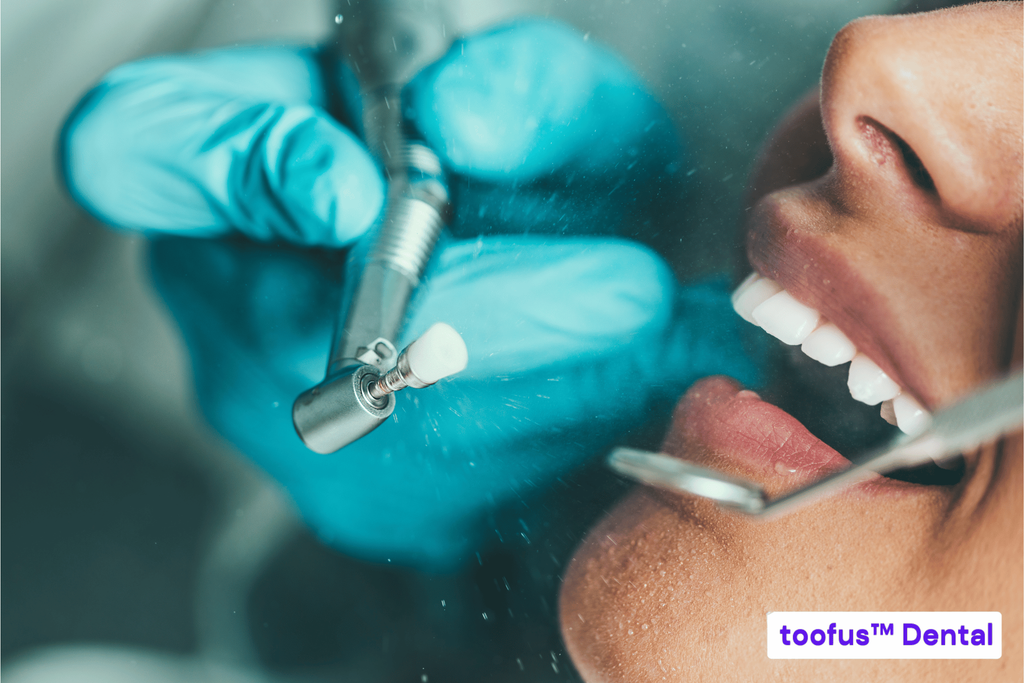
Scaling and root planing is commonly known as deep cleaning.
Scaling removes plaque, tartar and bacteria from above and below the gum line. Root planing smooths the root surfaces so that bacteria are less likely to attach again and the gums can heal more closely around the teeth.
This treatment is usually done when bacteria have gone deeper under the gums.
For example, if food gets trapped frequently and the gums bleed when brushing, there may be tartar underneath the gum line. Normal brushing cannot remove this tartar. This is why deep cleaning may be required.
Laser-Assisted Gum Disease Treatment
Laser-assisted gum disease treatment may be used together with conventional gum treatment to reduce bacteria and inflamed tissue in the gum pockets.
The purpose of laser treatment is not to replace proper diagnosis or deep cleaning. It is usually an adjunctive treatment that may help improve comfort, reduce bleeding and support healing in selected cases.
For example, a patient with inflamed gum pockets may receive scaling and root planing first, followed by laser-assisted disinfection to help reduce bacterial activity in the treated areas.
Suitability depends on the patient’s gum condition and severity of disease.
Antibiotics
Antibiotics may be used in some cases of gum disease, especially when there is active infection, pus, swelling or aggressive bacterial activity.
Antibiotics can be given in different ways. Some may be taken by mouth. Others may be placed directly into the gum pockets.
However, antibiotics alone are not a complete treatment for gum disease.
This is because antibiotics may reduce bacterial activity temporarily, but they do not remove hardened tartar stuck to the teeth and roots. If the source of infection is not removed, the problem can return.
Surgical Gum Disease Treatment
Surgical gum disease treatment may be required when the gum pockets are too deep to clean properly with non-surgical treatment alone.
This is usually considered for advanced gum disease, severe bone loss, persistent infection or areas that do not respond well after deep cleaning.
Surgery allows the dentist or periodontist to access deeper areas under the gums, remove bacteria and tartar more thoroughly, reshape damaged tissues or regenerate lost support where possible.
The aim is not to make treatment sound more serious than it is. The aim is to clean areas that cannot be cleaned predictably from the surface.
Bone Grafting
Bone grafting may be required when gum disease has caused bone loss around the teeth.
The bone is the foundation that supports your teeth. When bone is lost, teeth can become loose, unstable or eventually fall out.
Bone grafting uses grafting material to help support bone regeneration in selected areas. However, not every bone defect can be fully regenerated. Suitability depends on the shape, severity and location of the bone loss.
For example, if one tooth has a deep vertical bone defect, bone grafting may be considered. If there is widespread horizontal bone loss around many teeth, the focus may be disease control rather than full bone regeneration.
Soft Tissue Graft
A soft tissue graft may be used when the gums have receded, and the tooth roots are exposed.
Gum recession can cause sensitivity, longer-looking teeth, food trapping and aesthetic concerns. In some cases, it can also make the teeth more vulnerable because the root surface is not protected like enamel.
A soft tissue graft uses gum tissue to reinforce or cover areas where the gums are thin or receded.
This treatment is usually considered when gum recession is worsening, the gum tissue is too thin or the exposed root is causing sensitivity or functional problems.
Gingivectomy
A gingivectomy is a procedure used to remove excess gum tissue.
This may be required when the gums are enlarged, overgrown or difficult to clean properly. Excess gum tissue can create areas where bacteria and plaque accumulate more easily.
For example, some patients may have gum enlargement because of inflammation, medication or long-term plaque accumulation. If the gum shape makes cleaning difficult, removing the excess tissue may help improve access and long-term hygiene.
A gingivectomy may also be used for selected aesthetic or functional gum correction cases.
Guided Tissue Regeneration
Guided tissue regeneration is used in selected cases where gum disease has damaged the bone and supporting tissues around a tooth.
The procedure usually involves placing a special membrane or regenerative material to encourage the body to rebuild lost support.
This is not suitable for every patient or every tooth. It depends on the type of bone defect, the amount of remaining support and how well the patient can maintain oral hygiene after treatment.
The goal is to improve the long term stability of the tooth where regeneration is still possible.
Gum Grafting
Gum grafting is used to treat gum recession or areas where the gum tissue is too thin.
This may help cover exposed roots, reduce sensitivity, improve gum thickness and prevent further recession.
For example, a patient may notice that one lower front tooth looks much longer than before. The gum may have receded because of thin gum tissue, brushing trauma, previous braces treatment or gum disease. Gum grafting may be recommended to strengthen the area.
Gum grafting does not treat active infection by itself. Active gum disease must be controlled first.
Pinhole Gum Rejuvenation
Pinhole gum rejuvenation is a minimally invasive technique that may be used to reposition receded gum tissue without traditional gum grafting in suitable cases.
Instead of taking tissue from another area, a small entry point is made, and the existing gum tissue is gently repositioned.
This treatment is not suitable for every type of gum recession. It works best when there is enough healthy gum tissue available to move.
Patients should not assume that every receding gum case can be treated with this method. A proper gum assessment is still required.
Periodontal Surgery
Periodontal surgery, also known as open flap debridement, may be required when gum pockets are too deep to clean properly with non-surgical treatment.
During the procedure, the gum tissue is gently lifted so that the dentist or periodontist can clean the root surfaces and remove bacteria, tartar and infected tissue more thoroughly.
After cleaning, the gums are placed back around the teeth to allow healing.
This treatment may sound intimidating, but the purpose is straightforward. It allows deeper cleaning in areas that cannot be accessed properly from the surface.
Bone Surgery
Bone surgery may be required when gum disease has caused irregular bone defects around the teeth.
When bone is damaged unevenly, it can create deep areas where bacteria continue to accumulate. Bone surgery may involve reshaping or smoothing the affected bone so that the gums can heal in a more stable and maintainable way.
The purpose is not only to treat the current infection. The purpose is also to reduce areas where bacteria can hide again.
This is usually considered only when simpler treatment options are not enough.
Tissue Stimulating Proteins
Tissue stimulating proteins may be used in regenerative periodontal treatment to encourage the body to rebuild lost gum and bone support.
These proteins are applied to the affected root surfaces during surgery. They are designed to support the regeneration of tissues that help anchor the tooth.
This treatment is only suitable for selected cases.
For example, if a tooth has a specific type of bone defect and still has enough remaining support, tissue stimulating proteins may be considered as part of a regenerative treatment plan.
Which gum disease treatment do I need?
The treatment you need depends on your gum pocket depth, bone level, bleeding score, tooth mobility, medical history and how active the infection is.
A patient with mild bleeding may only need dental cleaning, home care improvement and regular monitoring.
A patient with deep gum pockets, loose teeth and bone loss may need scaling and root planing, periodontal maintenance, antibiotics or surgical gum treatment.
A patient with severe gum recession may need gum grafting only after active gum disease has been controlled.
This is why gum disease treatment should always begin with proper diagnosis. The right treatment depends on the condition of your gums, bone and teeth.
Gum Disease Treatment Procedure
Gum disease treatment should not begin blindly.
Before treatment starts, it is necessary to first understand your gum condition, medical background, bone support and treatment goals. This is because gum disease can range from mild bleeding gums to advanced periodontitis with loose teeth and bone loss.
The treatment procedure usually happens in 3 stages.
Before gum disease treatment, your dentist will assess the condition.
During gum disease treatment, bacteria, plaque and tartar are removed from the affected areas.
After gum disease treatment, your dentist will review healing and monitor whether the gum condition has stabilised.
Before Gum Disease Treatment
Before gum disease treatment begins, your dentist will first check how severe the gum disease is.
This is important because not every patient needs the same treatment. A patient with mild bleeding gums may only need dental cleaning and better home care. A patient with deep gum pockets, gum recession and loose teeth may require deep cleaning, periodontal maintenance or surgical gum treatment.
For example, two patients may both complain of bleeding gums. The first patient may have gingivitis with no bone loss. The second patient may have advanced gum disease with deep pockets and loose teeth. Although the symptom sounds similar, the treatment required may be very different.
This is why proper diagnosis should always come before treatment.
Gum Examination
A gum examination allows your dentist to check the condition of your gums, teeth and supporting bone.
Your dentist may look for bleeding, swelling, gum recession, pus, tooth mobility, food trapping, plaque, tartar and changes in your bite.
A gum pocket assessment may also be done. This measures the space between your tooth and gum. Deeper pockets can suggest that bacteria have moved below the gum line.
Dental X-rays may also be required to check whether bone loss has already happened.
This step is important because gum disease can be hidden. Your teeth may look normal from the outside, but the foundation underneath may already be affected.
Medical History Discussion
Your dentist will also discuss your medical history before planning gum disease treatment.
This may include diabetes, heart disease, pregnancy, immune conditions, dry mouth, smoking habits, medications, previous dental treatment and family history of gum disease.
This discussion is important because your overall health can affect your gums and healing.
For example, a patient with uncontrolled diabetes may heal more slowly and may be more prone to infection. A smoker may have reduced bleeding signs even when the gum disease is severe. A pregnant mother may experience gum swelling because of hormonal changes.
This does not mean treatment cannot be done. It means treatment should be planned with the right precautions.
Gum Treatment Plan
After the examination, your dentist should explain your gum treatment plan clearly.
You should understand what stage of gum disease you have, which teeth are affected, whether there is bone loss, whether the disease is active and what treatment options are suitable.
A gum treatment plan may include dental cleaning, scaling and root planing, periodontal maintenance, antibiotics, laser-assisted gum treatment or surgical gum treatment.
For more severe cases, the dentist may also discuss whether certain teeth can be saved or whether extraction may be required.
A good gum treatment plan should not only tell you what treatment is needed. It should also explain why the treatment is needed.
The aim is to stabilise the gums, reduce inflammation, protect bone support and prevent further tooth loss.
During Gum Disease Treatment
During gum disease treatment, your dentist or oral health therapist will remove plaque, bacteria and tartar from the affected areas.
If the gum disease is mild, this may feel similar to a normal dental cleaning.
If the gum disease is more advanced, deeper cleaning may be required below the gum line. This is commonly known as scaling and root planing.
Local anaesthesia may be used if the gums are sensitive or if deeper areas need to be cleaned. This helps make the treatment more comfortable.
Some patients may require treatment over more than one visit, especially if several areas of the mouth are affected.
For example, a patient with gum disease affecting the whole mouth may have treatment split into different appointments. This allows each area to be cleaned properly without making the appointment too long or uncomfortable.
After Gum Disease Treatment
After gum disease treatment, your gums may feel tender or sensitive for a few days.
You may notice mild bleeding, soreness or sensitivity to cold drinks. This is usually temporary and should improve as the gums heal.
Your dentist may give you specific instructions on brushing, flossing, interdental brushes, mouth rinse or medications if required.
It is important to follow these instructions carefully. Gum disease treatment does not end when the appointment ends. Healing and stabilisation also depend on how well the gums are maintained at home.
For example, if deep cleaning is done but plaque builds up again quickly after treatment, the gum disease can return.
Follow-up Reviews
Follow-up reviews are important after gum disease treatment.
Your dentist will check whether bleeding has reduced, whether the gums are healing, whether gum pocket depths have improved and whether the teeth are more stable.
Some patients may need a review after a few weeks. Others may need regular periodontal maintenance every 3 to 4 months, depending on the severity of the condition.
Patients with a history of gum disease should not think of treatment as a one-time-only appointment. Gum disease can return if bacteria builds up again.
The purpose of follow-up reviews is to make sure the condition stays stable for as long as possible.
This is especially important if you are planning for dental implants, braces, clear aligners, dentures or full mouth rehabilitation. The gums and bone should be stable before any major dental treatment is started.
Benefits of Treating Gum Disease
Treating gum disease is not only about stopping bleeding gums.
The bigger purpose is to reduce inflammation, protect the bone supporting your teeth, maintain chewing function and prevent unnecessary tooth loss.
For many patients, gum disease treatment can also make daily life more comfortable. Eating, brushing, speaking and smiling can feel more natural when the gums are healthier and more stable.
Reduce Bleeding
Bleeding gums are usually a sign that the gums are inflamed.
When gum disease is treated properly, bacteria, plaque and tartar are removed from the areas irritating the gums. As the inflammation reduces, the gums usually bleed less when brushing, flossing or eating.
For example, a patient may initially notice blood every time they brush. After gum treatment and better home care, the bleeding may reduce significantly because the gums are no longer constantly irritated by bacteria.
This is often one of the first improvements patients notice.
Reduce Swelling
Swollen gums can make the teeth feel uncomfortable, bulky or difficult to clean around.
Gum disease treatment helps to remove the bacteria and tartar causing the swelling. Once the gums start healing, they may become firmer, tighter and less puffy.
Some patients may feel that their teeth look slightly longer after swelling reduces. This can happen because unhealthy gum swelling has settled. It does not always mean the condition has worsened.
Healthy gums should look firm, stable and easier to clean around.
Reduce Inflammation
Inflammation is your body’s response to bacteria around the gums.
Short-term inflammation can be part of healing. Long-term inflammation is different. If gum inflammation continues for months or years, it can slowly damage the gums, bone and supporting tissues around the teeth.
Treating gum disease helps to reduce this inflammatory burden.
For example, if a small fire keeps burning around the foundation of a house, the structure will eventually weaken. Gum inflammation works in a similar way. If it continues for too long, the foundation around the teeth can be affected.
Prevents Bone Loss
The bone around your teeth is the foundation that holds your teeth in place.
When gum disease progresses, bacteria and inflammation can destroy this bone. Once bone is lost, it does not usually grow back naturally on its own.
Treating gum disease early helps to prevent further bone loss.
This is important because a tooth can look normal from the outside but still have poor support underneath. Dental X-rays are often needed to check whether bone loss has already started.
The earlier gum disease is controlled, the better the chance of preserving the remaining bone support.
Prevent Teeth Loss
One of the most serious consequences of untreated gum disease is tooth loss.
This happens when the gums and bone can no longer support the teeth properly. Teeth may become loose, shaky, painful to chew with or eventually fall out.
Gum disease treatment helps to reduce infection and stabilise the supporting structures around the teeth.
For example, a patient may come in because one tooth feels slightly shaky. After assessment, the dentist may find early bone loss. Treating the gum disease at this stage may help keep the tooth stable for longer instead of waiting until extraction becomes the only option.
Maintains Stability
Stable gums help keep teeth in their proper position.
When gum disease progresses, teeth may start shifting, spacing out or feeling different when biting. This can affect chewing, speech and appearance.
Treating gum disease helps to maintain a healthier foundation around the teeth.
This is especially important before braces, clear aligners, dental implants, bridges or dentures. If the gums and bone are unstable, any treatment built on top of them may become less predictable.
A stable foundation should always come before major dental treatment.
Reduced Systemic Inflammation
Gum disease does not only affect the mouth.
Advanced gum disease is linked to chronic inflammation. This can add stress to the body, especially in patients with existing medical conditions such as diabetes or cardiovascular disease.
Treating gum disease may help reduce the inflammatory load coming from the mouth.
For diabetic patients, healthier gums may also make it easier to manage blood sugar together with proper medical care, diet and lifestyle control.
This does not mean gum disease treatment replaces medical treatment. It means oral health should be treated as part of overall health.
Improved Daily Life
Healthy gums can improve daily life in simple but meaningful ways.
Patients may feel more comfortable brushing, eating, speaking and smiling.
Bad breath may improve. Bleeding may reduce. Chewing may feel more stable.
Patients may also feel less anxious when visiting the dentist because the condition is being properly managed.
If you have been avoiding eating harder foods because of gum discomfort, you may slowly regain confidence after treatment. Being able to chew comfortably again can affect diet, mood and quality of life.
Gum disease treatment is not only about saving teeth. It is about helping patients keep function, comfort and confidence for as long as possible.
Gum Disease Myths and Facts
There are many misconceptions about gum disease. Some patients delay treatment because they assume bleeding gums are normal. Some patients avoid treatment because they worry that it is unnecessary. Others only come in when their teeth become loose.
The problem with gum disease is that it can stay quiet for a long time. By the time the signs become obvious, the gums and bone may already have been affected.
Myth #1: I do not need to treat gum disease as it can get better naturally
Gum disease does not always get better naturally.
In the early stage, mild gum inflammation may improve with better brushing, flossing and professional cleaning. However, once tartar has hardened around the teeth or underneath the gums, it cannot be removed properly with brushing alone.
This means that the bacteria can continue irritating the gums even if you try to brush more thoroughly.
For example, if dirt is stuck under a carpet, cleaning only the surface will not remove what is trapped underneath. Gum disease works in a similar way. If bacteria and tartar are trapped below the gum line, professional treatment may be required.
Myth #2: Gum disease treatment is just dental cleaning
Gum disease treatment is not always just dental cleaning.
A normal dental cleaning is usually for patients with generally healthy gums. Gum disease treatment is for patients who have inflammation, bleeding, deeper gum pockets, tartar under the gums or bone loss.
For early gum disease, cleaning may be enough. For more advanced gum disease, treatment may involve scaling and root planing, periodontal maintenance, antibiotics, laser-assisted gum treatment or surgical gum treatment.
This is why two patients can both receive “cleaning”, but the depth, purpose and complexity of treatment may be completely different.
Myth #3: If my gums are bleeding, I should stop brushing to prevent further bleeding
If your gums are bleeding, you should not stop brushing.
Bleeding usually means that the gums are inflamed. If you stop brushing the area, more plaque can accumulate. This can make the inflammation worse and cause even more bleeding over time.
The better approach is to brush gently but thoroughly with a soft-bristled toothbrush. You should also clean between the teeth with floss or interdental brushes.
For example, if a wound is dirty, avoiding it does not make it cleaner. It needs to be cleaned carefully. Bleeding gums also need proper cleaning and assessment.
Myth #4: Gum disease only happens if I have poor oral hygiene
Poor oral hygiene is a common cause of gum disease, but it is not the only cause.
Gum disease can also be affected by smoking, diabetes, pregnancy, hormonal changes, genetics, stress, dry mouth, medications, clenching, grinding and immune system changes.
This means that even patients who brush daily can still have gum disease if they have other risk factors.
For example, a patient with well-brushed front teeth may still have deep gum pockets around the back teeth because of difficult cleaning access, smoking, diabetes or old tartar accumulation.
Myth #5: Gum disease treatment is just a dental scam that dentists say to get more money
Gum disease treatment is not a scam when there is proper diagnosis.
A proper gum disease diagnosis should be supported by signs such as bleeding gums, swollen gums, gum pocket measurements, tartar below the gum line, gum recession, tooth mobility or bone loss seen on dental X-rays.
Patients should not be expected to accept treatment blindly. You should be shown and told what the problem is.
For example, if your gum pockets are deep and your X-rays show bone loss, treatment is recommended because the foundation around the teeth is already affected. The aim is not to sell treatment. The aim is to prevent the disease from progressing further.
Myth #6: I do not have dental cavities, so I definitely do not have gum disease
Dental cavities and gum disease are different problems.
A cavity affects the tooth structure. Gum disease affects the gums, bone and supporting tissues around the teeth.
This means you can have no cavities but still have gum disease. Your teeth may look clean and intact, but the bone underneath may already be shrinking because of long-term inflammation.
For example, a house can have beautiful walls but weak foundations. Teeth are similar. The crown of the tooth may look fine, but the support underneath may not be healthy.
Myth #7: Receding gums are not a problem; gums can grow back
Receding gums should not be ignored.
When gums recede, the tooth roots may become exposed. This can cause sensitivity, longer-looking teeth, food trapping and a higher risk of root surface damage.
Gums usually do not grow back naturally once recession has happened. Some cases may be managed with better brushing technique and monitoring. Other cases may require gum grafting or other gum procedures if the recession is worsening or causing problems.
The key is to find out why the gums are receding. It may be due to gum disease, aggressive brushing, thin gum tissue, clenching, grinding or previous tooth movement.
Myth #8: Bleeding gums during pregnancy is super normal
Bleeding gums during pregnancy is indeed common, but that does not mean that it is normal. Bleeding gums during your pregnancy should not be ignored.
Pregnancy hormones can make the gums more sensitive to plaque and bacteria. This means the gums may swell or bleed more easily during pregnancy.
However, bleeding is still a sign of inflammation.
Pregnant mothers should still maintain proper brushing, flossing and dental checkups. Treating gum inflammation early can help reduce discomfort and prevent the condition from worsening during pregnancy.
The goal is not to create fear. The goal is to keep both oral health and overall health as stable as possible.
Myth #9: Children do not get gum disease
Children can get gum disease too.
In children, gum inflammation is often caused by plaque accumulation, poor brushing, mouth breathing, braces, erupting teeth or food trapping. Some children may also have swollen gums because they are not cleaning properly around new teeth.
For example, a child may brush quickly every morning but miss the gum line around the back teeth. Over time, the gums can become red, swollen and bleed when brushing.
Most gum problems in children are mild and treatable when caught early. However, bleeding gums in children should still be checked.
Myth #10: I have no teeth, so I will not have gum disease
Even if you have no teeth, your gums still need care.
Patients with no teeth can still develop gum irritation, infection, denture-related inflammation, ulcers, fungal infection or inflammation around dental implants.
If you wear dentures, plaque and bacteria can still accumulate on the denture surface and the gums underneath. If the dentures are loose or poorly fitted, they can also rub against the gums and cause sores.
If you have dental implants, gum disease can affect the tissues around implants. This is called peri-implant disease.
This is why patients with dentures, implants or no remaining natural teeth should still go for regular dental reviews.
Gum Disease Prevention
Preventing gum disease can be easy. The following is a list of excellent ways to keep gum disease at bay:
- Use dental floss or an interdental brush in your regular oral hygiene routine
- Brush your teeth at least twice a day with a soft-bristled toothbrush to remove dental plaque
- Use an antiseptic mouthwash in combination with your floss and brush to reduce bacterial activity in your mouth
- Maintain a balanced and nutritious diet to support gum health
- Reduce daily consumption of sugars and acidic foods or drinks that can contribute to the formation of dental plaque
- Try to quit smoking
- Monitor health changes
- Schedule 6-monthly dental cleanings and check-ins with your oral health therapist and dentist.
Gum Disease Treatment Risks
Gum disease treatment is generally safe when it is planned and carried out properly. However, like most dental treatments, there are still possible risks and side effects that patients should be aware of.
The most common risks are temporary sensitivity, gum tenderness, bleeding, soreness and discomfort after treatment. This is especially common after deep cleaning because bacteria and tartar are removed from areas below the gum line.
Some patients may also notice that their teeth feel slightly more sensitive to cold drinks after treatment. This can happen because the inflamed gums start to shrink and tighten as they heal. When the gums become less swollen, more of the root surface may be exposed.
This does not always mean that treatment made the condition worse. In many cases, it means that the swelling has reduced and the true gum level is now more visible.
For example, a patient with swollen gums may think that their gums are covering the teeth normally. After treatment, the swelling reduces, and the teeth may look slightly longer. This can be alarming, but it may simply mean that the unhealthy swelling has settled.
In more advanced cases, patients with very weak bone support may feel that their teeth are more mobile after treatment. This usually happens because heavy tartar was previously holding the teeth together like a false support. Once the tartar is removed, the actual stability of the teeth becomes clearer.
The larger risk is usually not gum disease treatment itself. The larger risk is delaying treatment until the disease causes irreversible bone loss, loose teeth or tooth loss.
Gum Disease Treatment Complications
Most patients recover well after gum disease treatment. However, complications can happen, especially in patients with advanced gum disease, poor healing, uncontrolled diabetes, smoking habits or poor oral hygiene after treatment.
Possible complications include prolonged bleeding, swelling, infection, pain, gum recession, tooth sensitivity and delayed healing.
If surgical gum treatment is required, there may also be stitches, bruising, temporary eating discomfort and a longer healing period. Some patients may need to avoid chewing on the treated area until the gums have stabilised.
In rare cases, a tooth that already has very poor bone support may still need to be extracted even after gum disease treatment. This does not mean the treatment failed. It may mean that the tooth was already too compromised before treatment started.
For example, imagine a tree with very little soil left around its roots. Even if you remove the weeds and improve the surrounding area, the tree may still be unstable if too much support has already been lost. Teeth behave in a similar way. Gum treatment can remove infection and stabilise the area, but it cannot always restore all the lost bone.
This is why diagnosis is important before treatment. Your dentist should assess your gum pocket depths, bone levels, tooth mobility and overall risk factors before explaining whether the treatment goal is full recovery, stabilisation or tooth preservation for as long as possible.
Recurrent Gum Disease
Gum disease can come back.
This is one of the most important things patients need to understand. Gum disease treatment is not always a one-time-only treatment because bacteria can accumulate again if plaque control, lifestyle habits or maintenance visits are not kept up.
For patients with a history of gum disease, the gums may remain more vulnerable even after treatment. This means that maintenance is just as important as the first round of treatment.
Recurrent gum disease can happen because of poor brushing, lack of flossing, missed dental visits, smoking, uncontrolled diabetes, dry mouth, stress, clenching, grinding or deep gum pockets that are difficult to clean at home.
For example, a patient may complete a deep cleaning and feel that the bleeding has stopped. However, if the patient does not return for periodontal maintenance and continues to avoid flossing, bacteria can build up again under the gums. Over time, the same bleeding, swelling and bad breath can return.
This is why gum disease is better understood as a condition that must be controlled, not simply removed.
The aim of treatment is to reduce bacteria, reduce inflammation, stabilise the gums and prevent further bone loss. The aim of maintenance is to keep the condition stable for as long as possible.
Some patients may need maintenance every 3 to 4 months. Others may only need 6-monthly reviews. The interval depends on the severity of the gum disease, smoking habits, diabetes control, oral hygiene, gum pocket depth and whether the disease is stable.
If your gum disease keeps returning, it is important to find out why. The issue may not be that treatment does not work. The issue may be that the bacteria, habits or health factors causing the disease have not been fully controlled.
When To See A Dentist For Your Gum Disease
You should see a dentist for gum disease when the symptoms do not go away on their own.
Many patients wait because they assume bleeding gums, bad breath or gum swelling are small problems. However, gum disease can worsen quietly over time. By the time the teeth become loose, the supporting bone may already have been affected.
It is better to check early than to wait until the condition becomes painful.
Gum disease is easier to treat when it is caught early. Waiting until the pain becomes severe or the tooth becomes loose may reduce the number of treatment options available.
A gum assessment can help you understand whether the condition is mild, moderate or severe.
It can also help you know whether you need simple cleaning, deep cleaning, periodontal maintenance or more advanced gum treatment.
The earlier you know, the easier it is to make the right decision.
Gum Disease Treatment Costs
Gum disease treatment costs depend on how severe your gum condition is.
A patient with mild gingivitis may only require dental cleaning and home care improvement. A patient with moderate to advanced gum disease may require deep cleaning, periodontal maintenance, antibiotics, laser-assisted gum treatment or surgical gum treatment.
This is why gum disease treatment should not be priced blindly before proper diagnosis.
For example, two patients may both say that their gums bleed. The first patient may have mild gingivitis with no bone loss. The second patient may have deep gum pockets, pus, loose teeth and bone loss. Although the symptoms sound similar, the treatment cost and complexity can be very different.
The final cost depends on several factors such as the severity of gum disease, number of teeth affected, gum pocket depth, amount of tartar below the gums, whether dental X-rays are required, whether local anaesthesia is needed, whether antibiotics are prescribed and whether surgical gum treatment is required.
In general, non-surgical gum disease treatment is usually more affordable than surgical gum disease treatment.
A normal dental cleaning is usually suitable for patients with healthy gums or very mild gum inflammation.
Scaling and root planing is usually required when bacteria and tartar have moved deeper below the gum line.
Surgical gum treatment is usually required when the gum pockets are too deep to clean properly from the surface or when the gums and bone require more advanced management.
At toofus™ Dental, gum disease treatment costs will be explained after proper gum assessment. This allows patients to understand what they are paying for, why the treatment is required and whether the goal is prevention, stabilisation or saving teeth for as long as possible.
Is gum disease treatment a one-time only treatment?
Gum disease treatment is not always a one-time-only treatment.
For mild gingivitis, the condition may improve after professional cleaning, better brushing, flossing and regular dental maintenance.
However, for patients with moderate to advanced gum disease, treatment is usually better understood as disease control.
This means the first stage of treatment reduces bacteria, tartar and inflammation. The follow-up stage checks whether the gums are healing. The maintenance stage helps prevent the disease from returning.
For example, a patient may complete deep cleaning and notice that the bleeding gums have improved. However, if the patient stops flossing, continues smoking or misses maintenance visits, bacteria can build up again under the gums. Over time, the gum disease may return.
This is why some patients require periodontal maintenance every 3 to 4 months. Others may only need 6-monthly reviews. The correct interval depends on the severity of gum disease, gum pocket depth, smoking habits, diabetes control, oral hygiene and whether the condition is stable.
The aim is not to keep doing treatment unnecessarily. The aim is to keep the gums stable so that teeth can last longer.
Are there subsidies available for gum disease treatment?
There are subsidies available for certain gum disease treatments.
Basic dental procedures such as scaling and polishing are eligible for CHAS subsidies for eligible Singaporeans at participating CHAS dental clinics. However, deep cleaning (root planing) is not covered under CHAS.
More advanced gum disease treatment, such as surgical gum treatment or gum grafting, can be partially covered under Medisave.
Can I Use My Dental Insurance For Gum Disease Treatment?
You may be able to use dental insurance for gum disease treatment, depending on your dental insurance plan.
Some dental insurance plans cover only basic dental cleaning or emergency dental care. Other dental plans cover periodontal treatment and extensive gum treatment.
Insurance coverage can vary significantly between patients.
Before starting treatment, you should check the following with your insurer:
- Whether gum disease treatment is covered
- Whether scaling and root planing is covered
- Whether periodontal maintenance is covered
- Whether surgical gum treatment is covered
- Whether there is an annual claim limit
- Whether pre-approval is required
- Whether the clinic needs to provide documents, X-rays or a treatment memo
At toofus™ Dental, patients may request an itemised treatment plan after assessment. This can help patients check with their insurer before proceeding with treatment.
Do Not Wait Until Your Teeth Become Loose
Gum disease is easier to treat when it is caught early.
If your gums are bleeding, swollen, painful, receding or if your teeth feel loose, it is worth getting a proper gum assessment done.
The purpose of gum disease treatment is not only to stop bleeding gums. Gum disease treatment reduces inflammation, protects your bone support and helps you keep your natural teeth for as long as possible.
For some patients, treatment may be simple. For others, gum disease may require deeper cleaning, regular periodontal maintenance or more advanced gum treatment.
The earlier you know the condition of your gums, the easier it is to take the right steps in treating gum disease.