Dr Clarice Yeoh
Experienced dental implant dentist with close to a decade of experience working with anxious patients and patients who are afraid of pain, who have held off treatments for complex dental implants and aesthetic-focused tooth restoration procedures.
Your Dental Implant Dentist

Dr Clarice Yeoh
Whether she is:
- Restoring front teeth with aesthetically-driven dental implant solutions that prioritise symmetry, proportion, and natural appearance;
- Restoring multi-unit dental implant restorations for bite and function;
- Managing pain or anxious patients to ensure a stress-free experience;
- Or guiding patients through comprehensive and complex treatment plans with clarity and reassurance,
Dr Clarice approaches each case with a calm, methodical, and patient-first mindset.
“Good dentistry should never feel rushed. I believe in first understanding the patient, their concerns, why they have postponed treatment, and the foundation of their oral health before recommending treatment.”
Dr Clarice Yeoh
Why Choose Dr Clarice Yeoh






Dr Clarice Practices At
Location
Gum Disease Treatment and Complex Dental Implants Centre
toofus™ Dental (Clementi)
352 Clementi Ave 2
#01-111
Singapore 120352
Contact toofus™ Dental (Clementi)
Operating Hours
Monday – Saturdays
10am – 7pm
Closed on Tuesdays and Sundays.
Ready to Take the Next Step to Restore Your Teeth with Dr Clarice?
Schedule your visit today and let her help you achieve your perfect smile done right.
Frequently Asked Questions
Common Questions That Patients Ask Dr Clarice Yeoh
Can I still get dental implants if I have gum disease?
Yes, it may still be possible to get dental implants if you have gum disease but the gum disease should be treated and stabilised first.
Dental implants need a healthy foundation. If the gums are inflamed, infected, bleeding, or affected by bone loss, placing implants too early may increase the risk of complications later. This does not mean implants are impossible. It means the first step is to improve the condition of your gums, reduce infection, and understand how much bone support is available.
For some patients, this may involve deep cleaning, root planing, gum maintenance, bone assessment, or staged treatment before implant placement. For more advanced gum disease, several rounds of treatment may be needed before implants can be planned safely.
Think of it as preparing the ground before building. If the foundation is unstable, the final result may not last as well. This is not an ideal outcome for you. By investing time and some cost into gum treatment first, you give your dental implants a better chance of healing, functioning, and lasting properly.
The aim is not just to place implants quickly. The aim is to place them on a healthier and more predictable foundation.
How long do I have to wait after gum disease treatment to do dental implants?
The waiting time depends on how severe your gum disease is and how well your gums respond to gum disease treatment.
For less severe gum inflammation, it may be possible to proceed with dental implants around 2–4 weeks after gum disease treatment, once the gums have improved and the area is stable enough for surgery.
However, if you have periodontitis, deeper gum pockets, bone loss, loose teeth, or active infection, you may need multiple rounds of gum disease treatment before implant placement is considered. This can sometimes take months.
We will reassess your gum pockets, bleeding, bone levels, oral hygiene, and healing response before deciding when it is safe to move forward. In some cases, additional treatment such as extractions, bone grafting, or staged healing may also be needed.
Dental implant treatment is not a sprint. It is a marathon. The goal is to build the right foundation before placing the implants.
A simple way to think about it is like surfing. You do not rush straight onto a hard board before learning balance on a foam board. In the same way, we do not rush into implants before the gums and bone are ready.
Why do I need gum treatment before complex dental implant treatment?
Complex dental implant treatment often involves replacing several missing, loose, or failing teeth. This may include multiple implants, implant bridges, overdentures, or All-on-X dental implants. In these cases, gum health becomes even more important because the treatment depends on a stable and healthy base.
If gum disease is active, there may be inflammation, infection, bleeding, deep gum pockets, and bone loss around the remaining teeth. These same risk factors can affect future dental implants if they are not controlled first.
It would be counterproductive to place dental implants into an unhealthy mouth, only for the implants to face a higher risk of infection or failure later. One of the concerns is peri-implantitis, which is inflammation and bone loss around dental implants. Patients with a history of periodontitis can have a higher risk of implant-related gum problems if strong precautions and maintenance are not followed.
Gum treatment helps reduce bacteria, inflammation, and bleeding before implant surgery. It also allows the dentist to assess which teeth can be saved, which teeth may need removal, and where implants can be placed more predictably.
For complex implant work, the aim is not simply to replace teeth. The aim is to rebuild the mouth on a cleaner, healthier, and more stable foundation.
I am anxious about dental implant surgery. Can my treatment be done slowly in stages?
Yes, complex dental implant treatment can often be done in stages, especially for patients who feel anxious about surgery.
Staging treatment can make the process feel more manageable. Instead of doing everything at once, we may break the plan into smaller steps. This may include gum treatment first, removal of teeth with poor prognosis, temporary immediate dentures, bone grafting, implant placement, healing, and final teeth later.
A staged approach gives you more time to understand each step, ask questions, prepare mentally, and recover between appointments. It also allows the dentist to monitor healing before moving to the next phase.
For anxious patients, communication matters. You can ask me to explain what will happen before each procedure, how long it may take, what you may feel, and what pain-control options are available. Local anaesthesia is commonly used for implant procedures, and other comfort measures may be discussed depending on the clinic and your suitability.
The goal is not to force you through treatment quickly. The goal is to help you feel informed, safe, and in control throughout the process.
If you are nervous, tell us early! A good treatment plan should consider both the clinical complexity and your emotional comfort.
What if I have loose teeth, gum disease, and missing teeth at the same time?
If you have loose teeth, gum disease, and missing teeth at the same time, you likely need a comprehensive treatment plan rather than a single-tooth solution.
The first step is usually a full assessment. We will check your gum condition, bone levels, tooth mobility, bite, missing tooth areas, existing infection, and whether any teeth can still be saved. Some loose teeth may be stabilised if the gum disease is controlled early enough. Others may have poor long-term prognosis and may need to be removed.
Missing teeth also need to be planned carefully. Depending on your condition, your options may include dentures, implant-supported dentures, implant bridges, or All-on-X dental implants.
The key question is not just, “How do we replace the missing teeth?” The more important question is, “Why did the teeth become loose or go missing in the first place?”
If the cause is gum disease, that must be addressed before or alongside tooth replacement. Otherwise, new dental work may be placed into the same unhealthy environment that caused the original problem.
This type of case should be approached in stages: Stabilise the gums, decide which teeth are worth keeping, remove hopeless teeth if needed, then plan the most suitable replacement option.
Can dental implants fail if my gum disease is not under control?
Yes. Unfortunately, dental implants can have a higher risk of complications if gum disease is not under control.
Gum disease is caused by bacteria and inflammation affecting the tissues that support the teeth. If this environment remains active before implant treatment, similar problems may develop around implants. This is known as peri-implant disease. In more serious cases, peri-implantitis can lead to inflammation, bone loss, and possible implant failure.
Dental implants are not immune to oral bacteria. They still need healthy gums, good bone support, proper cleaning, and regular maintenance. Patients with a history of gum disease may still be suitable for implants, but they usually need more careful planning and long-term maintenance.
This is why dentists often recommend gum treatment before implant placement. Treating the gums first helps reduce inflammation, bleeding, plaque, and infection. It also allows the dentist to check whether the mouth is stable enough for implant surgery.
After implants are placed, maintenance remains important. Regular cleaning, home care, gum checks, and review appointments help protect the implants over time.
The aim is not just to place the implant successfully. The aim is to keep it healthy for as long as possible.
How do you plan dental implants for someone with bone loss from gum disease?
Planning dental implants for someone with bone loss from gum disease starts with careful and thorough diagnosis. This is so important!
We will usually assess gum health, bone levels, tooth mobility, bite, missing tooth spaces, sinus position, nerve position, and overall oral condition. X-rays or 3D scans may be used to understand how much bone is available and where implants can be placed safely.
Bone loss can affect implant planning because implants need enough stable bone for support. If there is not enough bone, we may consider options such as bone grafting, sinus lift, angled implants, shorter (but not mini) implants, implant bridges, overdentures, or All-on-X treatment depending on the case.
The plan also depends on whether the gum disease is active or stable. Active infection and bleeding should usually be controlled before implant placement. If some teeth are loose or failing, we may also need to decide whether to save, remove, or replace them.
For complex cases, implant planning is not only about where to put the implant. It is also about where the final teeth need to be, how the bite will function, and how easy the implants will be to clean in the future.
Good planning helps reduce unnecessary surprises and gives the implant treatment a more stable foundation.
What if I am scared of pain during dental implant or gum treatment?
It is common to feel worried about pain before gum treatment or dental implant surgery. The important thing is to tell us early so we can plan your care with comfort in mind.
In certain cases, patients request for oral sedation or sedation for a more relaxing experience.
Most gum and implant procedures are done with local anaesthesia, which helps numb the area being treated. This means you should not feel sharp pain during the procedure, although you may still feel pressure, movement, or vibration. After treatment, some soreness, swelling, or tenderness can happen, depending on the procedure.
For anxious patients, the treatment can often be broken into stages. You can also ask for clear explanations before each step, short breaks during treatment, and written aftercare instructions so you know what to expect.
The fear of pain is often worse when patients do not know what is happening. A calm explanation, predictable appointment structure, and good pain-control plan can make treatment feel more manageable.
You do not need to pretend to be brave. If you are nervous, say so. The aim is to help you go through treatment safely, comfortably, and with as much control as possible.
Do I need to remove all my teeth before getting All-on-X?
No, not everyone needs to remove all their teeth before getting All-on-X dental implants.
All-on-X is usually considered when many teeth in the arch are missing, failing, loose, badly infected, or not suitable for long-term restoration. However, if some teeth are healthy, stable, and useful, we will see whether they can be preserved.
The decision depends on several factors: Gum disease severity, bone loss, tooth mobility, infection, bite, tooth structure, aesthetics, and your long-term treatment goals. A full assessment is needed before deciding whether to save teeth, remove teeth, or rebuild the full arch with implants.
Removing all teeth too quickly may not be the best decision for every patient. At the same time, keeping teeth with poor prognosis can sometimes compromise the final result.
The goal is to make a careful decision based on diagnosis, not fear or speed. For some patients, All-on-X may be the most practical way to restore a full arch of teeth. For others, a combination of saved teeth, individual implants, bridges, or overdentures may be more suitable.
A proper consultation helps determine which approach is most stable, realistic, and maintainable.
Are All-on-x dental implants better than overdentures?
All-on-X dental implants are not automatically better than overdentures. They are different solutions for different needs.
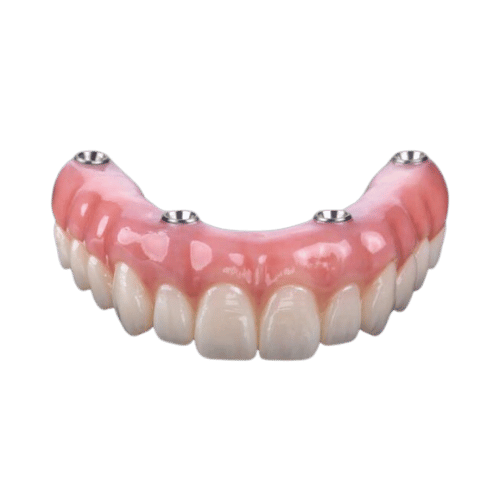
All-on-X usually refers to a fixed full-arch implant solution. The teeth are attached to dental implants and are not removed daily. This can feel more stable and closer to having fixed teeth. It may be suitable for patients who want stronger chewing function, a fixed result, and full-arch replacement.
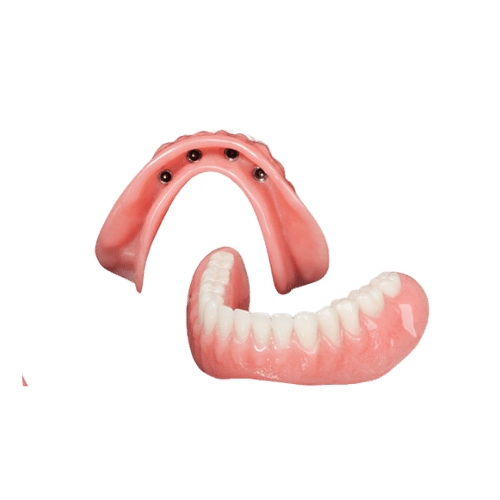
Overdentures are removable dentures supported by dental implants. They can be more stable than traditional dentures but are still removable for cleaning. They may be suitable for patients who want improved denture stability but prefer a less complex or more cost-conscious option.
The better choice depends on your bone condition, gum health, bite, budget, cleaning ability, aesthetic goals, medical history, and expectations. Some patients prefer the fixed feeling of All-on-X. Others prefer the easier cleaning and flexibility of overdentures.
For patients with gum disease or bone loss, the foundation must be assessed carefully before choosing either option.
The right question is not, “Which is better?” The better question is, “Which option is more suitable, maintainable, and predictable for my mouth?”
Our Signature Services
Dental Implants
(01)
Failed Implants Restoration
(02)
Buried Tooth Surgery
(03)
Wisdom Tooth Surgery
(04)
Dentures
(05)
Overdentures (Implant-Supported Dentures)
(06)
Multiple-Implants Restoration
(07)
All-on-X Dental Implants